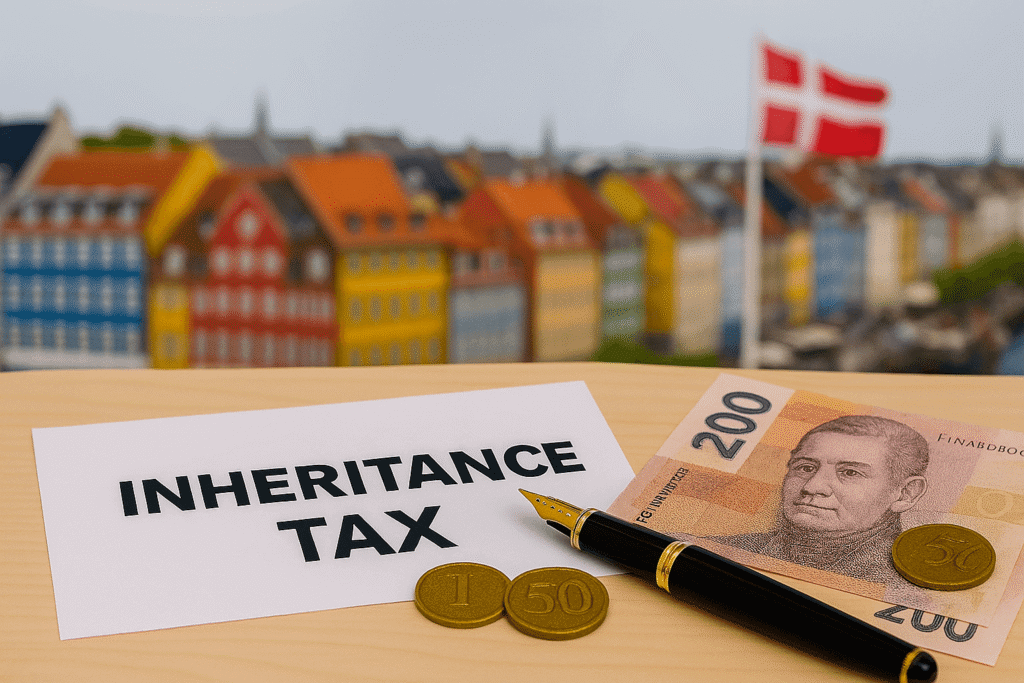
The absence of inheritance and gift tax in Sweden offers significant benefits in transferring wealth between generations, but it is still important to plan early. Intelligent planning of assets – whether in a will or during one’s life – may save tens or even hundreds of thousands of shekels, especially when it comes to assets with high capital gain potential or with tax implications in other countries. In this article, we will highlight the benefits of investing in Sweden, compare the circumstances to Israel and other European countries, and discuss the importance of early planning and creating a will.
Abolition of Inheritance and Gift Tax in Sweden
At the end of 2004, Sweden abolished inheritance and gift taxes, becoming one of the few countries in Europe where intergenerational asset transfers can be made without tax liability. Sweden eliminated inheritance tax as part of a reform aimed at improving conditions for wealth transfer between generations and encouraging entrepreneurship. This move stemmed from the understanding that these taxes primarily affected middle and lower-class families, while the wealthy managed to avoid them through sophisticated tax planning.
Currently, Sweden does not charge any tax on the transfer of assets through inheritance or gifts – not from the testator, not from the giver, and not from the recipient. This fact makes it an attractive destination in terms of intergenerational planning and family investments.
Why is it important to plan in advance?
Despite the absence of inheritance tax in Sweden, it’s important to understand that estate planning is not just a tax matter – it is primarily a legal, regulatory, and familial issue. Inheritances may encounter bureaucratic obstacles, objections, and even unexpected tax liabilities in other countries.
Inheritance taxation in Israel compared to Sweden
In Israel, like Sweden, there is no estate or inheritance tax. However, in some cases, tax may be imposed on the full value of the received inheritance, such as capital gains tax when selling the property.
The tax treaty between Israel and Sweden includes provisions that can prevent double taxation, but it is important to plan reporting and filing accurately to avoid double payment.
To read the Israeli-Swedish tax treaty in Hebrew on the Ministry of Finance website, click here.
Comparisons to other European countries
Most European countries continue to impose inheritance tax at varying rates:
France: 5%-60%
Germany: 7%-50%
Belgium: 3%-80%
Netherlands: 10%-40%
Countries such as Austria and Norway abolished their inheritance tax, similar to Sweden.
Making a will in Sweden – the key to saving taxes and avoiding disputes
Despite the absence of inheritance tax, drafting a will in Sweden is important due to local inheritance laws. Heirs do not always receive the inheritance smoothly. Sometimes complex procedural steps are needed to obtain a probate order or permission to realize assets. A will allows for the distribution of assets according to the wishes of the deceased and prevents future disputes.
A well-organized and detailed will can ensure that assets are transferred smoothly and efficiently to the heirs. The will should include the testator’s wishes but must also comply with legal requirements to remain valid.
During the drafting stage, it is often possible to choose which local law will apply to the will. This choice can significantly affect estate planning and future implementation.
Without prior planning – i.e., inheritance without a will – the law that will apply to the deceased’s assets is that of their last primary place of residence.
If you own assets in Sweden, our recommendation is to draft a will to ensure the asset transfer is carried out as smoothly as possible. A will can prevent misunderstandings or prolonged legal proceedings and ensure the process is orderly even after the testator’s death.
Practical information about exercising inheritance in Sweden
To claim an inheritance in Sweden, documents such as the deceased’s death certificate, a will (if available), copies of the heirs’ identity documents, asset ownership documents, bank account confirmations, and more are usually required.
It is important to note that the process of claiming an inheritance in Sweden can take from several months up to a year or more, depending on the complexity of the estate, the number of heirs, the existence of a will, etc.
Received an inheritance in Sweden? Here are 6 steps to properly realize an inheritance from Sweden
1. Factual and legal background check
First, check the type of assets that will be inherited, the location, the identity of the heirs and their status, the value of the assets, and more.
2. Examination of the timing and location of the inheritance realization
It is necessary to consider whether it is worthwhile to realize (sell or use) the assets now, and if so, where it is better to do so – in Sweden or in Israel?
3. Regulatory and banking aspects
Check the costs of transferring the funds, whether it is necessary to open an account in Sweden or another country for transferring the funds, what approvals are required, etc.
4. Plan the transfer of assets
Consider whether to transfer the assets themselves or their proceeds (money from their sale), and what the implications are in terms of taxes, exemptions, deductions, etc.
5. Examination of the future effects on the assets
It is advisable to examine the future effects on the assets – for example, a future sale of the assets may, in many cases, be subject to capital gains tax in Israel.
6. Transfer the assets to Israel
Perform all required actions, provide documents, handle matters with banks in Sweden and Israel, then complete the asset transfer.
How Can We Help?
The goal is to transfer the inheritance to the heirs in Israel in the most tax-efficient manner, while addressing legal issues both in Israel and Sweden, as well as matters related to banking and regulation. For example, should a specific asset be realized (sold) in Sweden or transferred to Israel? How should inheritance funds be transferred to a bank account in Israel? How can the various exemptions available to different heirs be utilized? Should gifts be given during one’s lifetime? Should a trust be established? Strategic planning, in accordance with applicable laws and tax treaties, is essential to minimize tax liabilities.
The firm Nimrod Yaron & Co. has extensive experience in providing personal and professional guidance to Israelis with assets and inheritances in many countries around the world, including Sweden, from the initial planning stages, through dealings with authorities in both Sweden and Israel, and all the way to transferring the inheritance funds to the heir’s bank account.
We collaborate with all relevant professional parties in both Sweden and Israel and provide legal solutions tailored to the specific circumstances, both in terms of taxation and banking.
If you have inherited assets or intend to bequeath assets in Sweden in the future, our team of experts specializing in international taxation and inheritance law would be happy to advise you on the matter – contact us to schedule an initial consultation.
Q&A
Is tax payable in Israel on a property inherited from Stockholm, Sweden?
No. There is no inheritance tax in Israel. However, capital gains tax may apply upon the sale of the inherited assets. It is important to determine the recommended timing for selling the inherited assets.
Why is it important to plan intergenerational asset transfers in advance?
Intergenerational asset transfers from abroad are not only a family matter but also a tax and financial issue. Early planning, with attention to legal matters in both Israel and abroad, can save significant amounts of money and prevent legal complications.
What are the consequences in case there is no will?
In the absence of a will, the inheritance will be distributed among the legal heirs according to Swedish inheritance law.
What documents are required for the inheritance process in Sweden?
To process an inheritance in Sweden, documents such as a death certificate, a will (if available), copies of heirs’ ID cards, property ownership documents, bank account confirmations, and more are required.
How long does the inheritance process take in Sweden?
The inheritance process in Sweden can take anywhere from several months to a year or more, depending on the complexity of the deceased’s estate, the number of heirs, whether a will exists, and other factors.